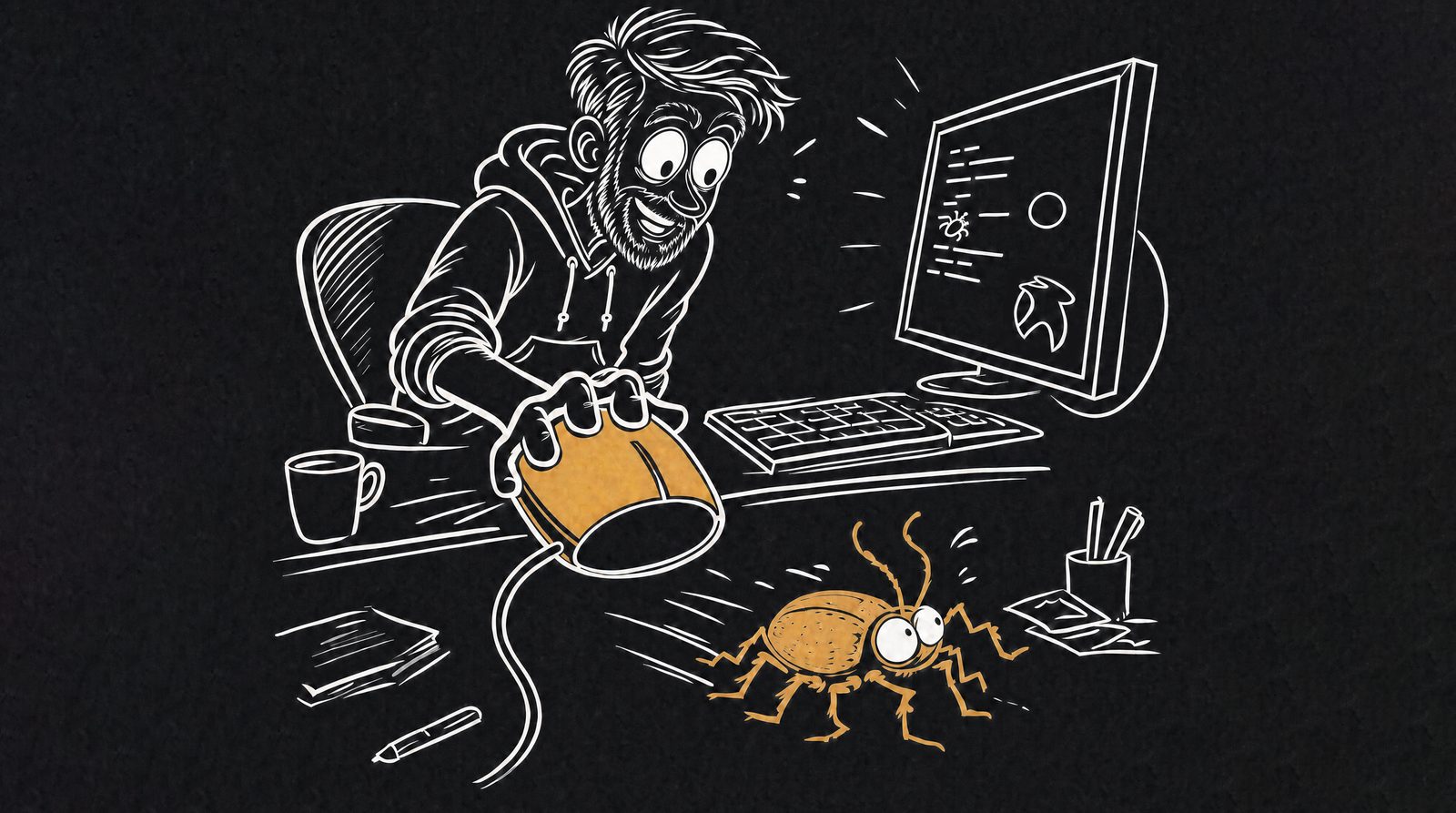
The bug we'd have chased for a week, we found by lunchtime
How an AI-built diagnostic tool caught two hidden checkout bugs on a busy online store in hours, and why an engineer still makes the fix.
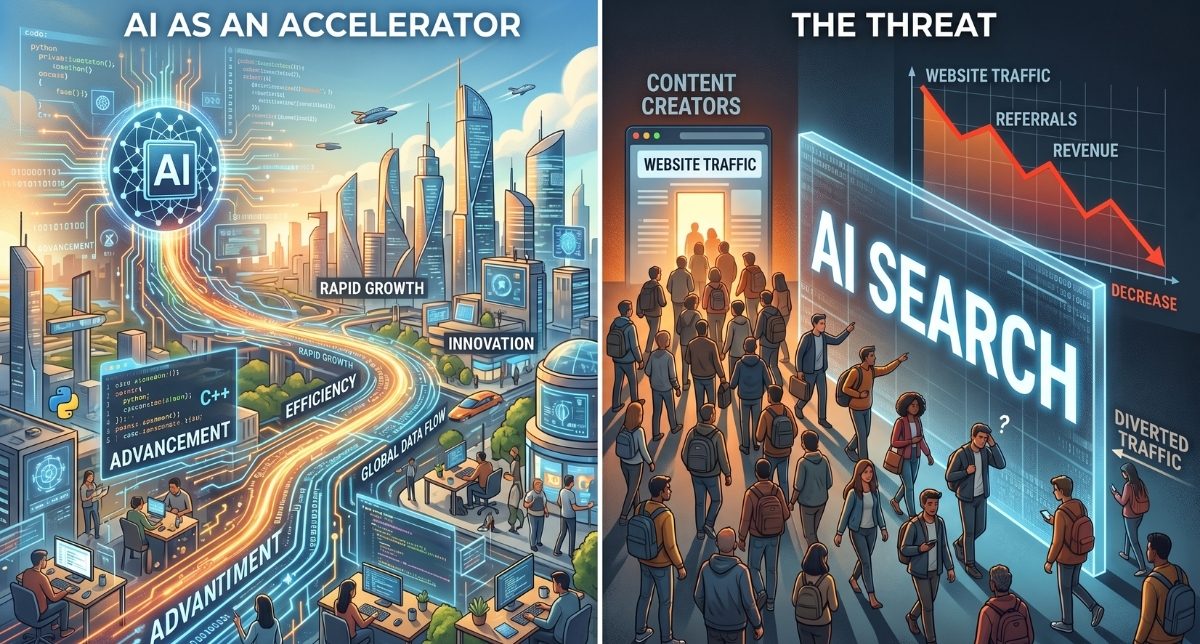
AI is an accelerator if you use it right, and a threat if you ignore it. That single tension sums up where SEO and web development sit at the moment, and it is worth being clear-eyed about both sides rather than picking the comfortable one.
On the upside, AI lets us turn around content, changes and new website builds significantly faster than before. In practice, that means you get more done inside the same budget, and ideas that would once have waited a quarter for capacity can happen now. It also opens the door to something that used to belong only to big brands: smarter, more personalised content produced at a scale that was out of reach for most small and medium-sized businesses. The cost of doing good, tailored work has come down sharply, and that is good news if you are willing to use it well rather than lazily.
Take personalised content as an example. Until recently, writing genuinely different landing pages for ten different customer segments was a luxury only a large budget could buy. Now the heavy lifting of drafting those variations is fast, so a smaller business can speak to each segment in its own language instead of settling for one generic page that half-fits everyone. Used with care, that is a real edge that used to be priced out of reach for most of the businesses we work with.
I would be doing you a disservice to stop there. Google's AI Overviews increasingly answer a user's question directly on the results page, in a summary built from sites like yours. A recent controlled study found that when those summaries appear, clicks to the websites below them fall by roughly a third. Read that carefully. You can rank well, do everything right, and still lose traffic, because the searcher got their answer without ever leaving Google. At the same time, the flood of AI-generated content washing across the web makes it harder than ever to stand out from the noise.
It is worth sitting with what that actually means. The deal the open web ran on for two decades, you make something useful, and Google sends you the visitor, has quietly changed. More and more, Google keeps the visitor and serves their usefulness to them second-hand. That is not a cue to abandon search, but a cue to make sure that when someone does click through, or asks an AI a question only your expertise can answer well, it is your business that the answer points back to.
Both of those pressures push in the same direction, and the response to both is the same. They put a premium on authentic, expert-led content that genuinely reflects your business: the kind of thing an AI summary cannot manufacture and a competitor cannot conjure from a prompt.
This is where EEAT comes in. It is Google's measure of experience, expertise, authoritativeness and trustworthiness, and it has quietly become the thing that separates content that gets found from content that gets buried. It is also the reason we have always pressed you for the specific details, the real numbers, the case studies, the things only your business actually knows.
For years, some clients saw that as us being demanding. Now the reason is plain. Anyone can prompt an AI for a competent, generic article on your industry in seconds, and so can all of your competitors. What no one else can produce is your genuine experience: the job that went sideways and how you fixed it, the result you got for a real customer, the particular way you solve a problem nobody else solves quite the same way. That is the moat. The specifics are what build it, and they are exactly what we have been collecting from you all along.
And none of it is exploitable, which is the part I find quietly encouraging. You cannot fake twenty years in a trade, a real customer result, or the judgement that comes from solving problems a hundred times. Those are exactly the signals Google is leaning on harder, precisely because a content farm cannot reproduce them. So the job is less about outsmarting the system and more about capturing what is already true about your business and putting it somewhere it can be found.
One distinction is worth making plainly. The businesses I worry about are the ones treating AI purely as a way to make more content faster, because they are optimising for the thing that is becoming worthless. The ones I am confident about are using the same speed to get their genuine expertise documented and published, which grows more valuable by the month. The tool is identical. The intent is everything.
So the honest picture is neither the hype nor the doom. AI does part of the job, and it does it well. It will not, on its own, make you stand out, because standing out now depends on precisely the things it cannot fake. Our work with you is to take your real expertise and get it in front of the right audience, in a form that both people and search engines trust. The tools have changed and will keep changing. The fundamental task, proving you are the real thing, has not. If anything, it has never counted for more. Get that right, and the technology becomes an ally rather than a threat, whatever shape it takes next.
How an AI-built diagnostic tool caught two hidden checkout bugs on a busy online store in hours, and why an engineer still makes the fix.

AI design tools in Canva and Photoshop let us show clients real options in the room. Why a designer still makes every final call on brand.

How an AI-native code editor turned a fortnight's courier integration into an hour's first draft, and why the saved time goes into testing and polish.
Book a free call and we will show you where AI-native marketing can grow your business.
Book a call ↗