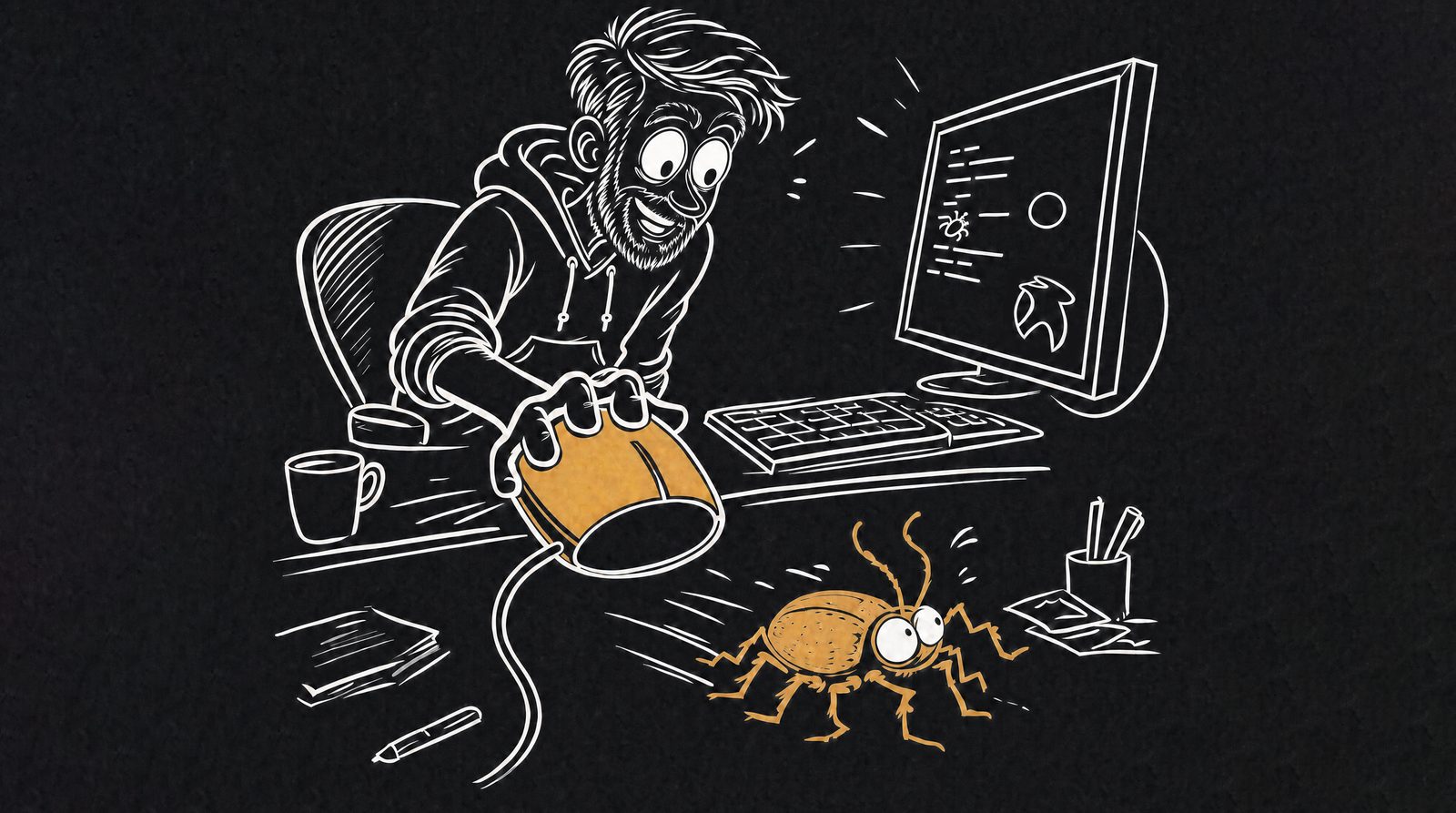
The bug we'd have chased for a week, we found by lunchtime
How an AI-built diagnostic tool caught two hidden checkout bugs on a busy online store in hours, and why an engineer still makes the fix.

AI is changing search faster than any update I've seen in years. But one thing has surprised me. The more AI-generated content appears online, the more genuinely useful, expert-written content stands out. That can sound like a paradox given how much AI content is being produced right now. It is not a paradox. It is the whole point.
For the digital side of your business, this brings opportunity and risk in equal measure. Useful, trustworthy content that genuinely helps your customers has more chances than ever to be found, surfaced and cited. Thin or purely AI-written pages, the kind churned out to fill a content calendar, are increasingly likely to struggle. The opportunity sits squarely with the businesses willing to invest in SEO and content that actually helps the people reading it, rather than content written to tick a box.
I have watched this play out across the accounts I work on. The pages quietly gaining ground are the specific, genuinely helpful ones: the guide that answers the awkward question nobody else bothered with, the page clearly written by someone who knows the subject. The pages losing ground are the thin, written-for-a-robot ones that could have come from anywhere. The gap between those two is widening, not narrowing, and quality is fast becoming the only durable advantage.
I find that genuinely reassuring rather than threatening. The web is filling up with generic, machine-made pages, and that makes anything truly useful stand out more, not less. The bar for being noticed is rising, and a rising bar rewards the work we have always believed in. If everyone else is racing to publish more, the advantage goes to whoever publishes better.
We use tools like Claude and ChatGPT every day for research, content planning and SEO analysis. They help us work faster, identify opportunities sooner and analyse large amounts of information efficiently. But they're assistants, not decision-makers.
A concrete example. When I am planning content for a client, these tools can map out the questions real people actually ask around a topic in minutes, where it used to take an afternoon of digging. That is a brilliant head start. It is not a finished plan, because the tool does not know your business, your customers, or the angle that only you can offer. So I take the head start and then do the part that genuinely needs a person.
But there is a firm line. Everything is still reviewed by our team of SEO specialists before it goes anywhere near your site. Speed and volume never come at the cost of quality or accuracy, because in our field, a confident, fast, wrong answer is worse than no answer at all. An AI will state something incorrect with exactly the same certainty as something correct, and knowing the difference is the job. The tools accelerate the work. They do not get the final say, and they do not replace the judgement of someone who has done this for years.
This is the failure I see most often in AI-heavy SEO: confident, fluent, and subtly wrong. A made-up statistic stated as fact. A recommendation that was true two years ago and is now actively harmful. An outdated rule applied with total conviction. Catching that needs someone who actually knows the field and is willing to check, which is the whole reason a specialist still reads every word. Speed without that check is not a service; it is a liability dressed up as efficiency.
If you're interested in following AI search developments yourself, Google's Search Central documentation remains the best place to understand what Google actually recommends. Search Engine Journal is another reliable source for industry updates. You do not need to become an expert to stay informed. A little healthy scepticism about the louder claims goes a long way.
I would add one habit worth keeping: be sceptical of anyone selling a single trick to win at AI search. There is no trick. There is understanding what the platforms reward, doing the work properly, and adjusting as things move, which is far less exciting and far more reliable than whatever is being hawked in your inbox this week. Reliable, in this game, beats exciting every time.
I have been doing this long enough to have lived through several 'everything has changed' moments. Each time, the people who panicked and took shortcuts did worse than those who simply kept doing the fundamentals well. I fully expect this one to rhyme.
Here is what I keep coming back to. The technology will keep evolving, and the tactics will keep shifting under our feet. The key to SEO success has not moved. Provide genuinely valuable content. Maintain a strong, healthy website. Focus on giving your customers the best possible experience. Do those three things consistently, and you stay well placed, whatever search turns into next. AI changes the tools we use to get there. It does not change what good looks like. Get the fundamentals right, and you are not at the mercy of the next shift in search; you are simply ready for whatever it turns out to be.
How an AI-built diagnostic tool caught two hidden checkout bugs on a busy online store in hours, and why an engineer still makes the fix.

AI design tools in Canva and Photoshop let us show clients real options in the room. Why a designer still makes every final call on brand.

How an AI-native code editor turned a fortnight's courier integration into an hour's first draft, and why the saved time goes into testing and polish.
Book a free call and we will show you where AI-native marketing can grow your business.
Book a call ↗