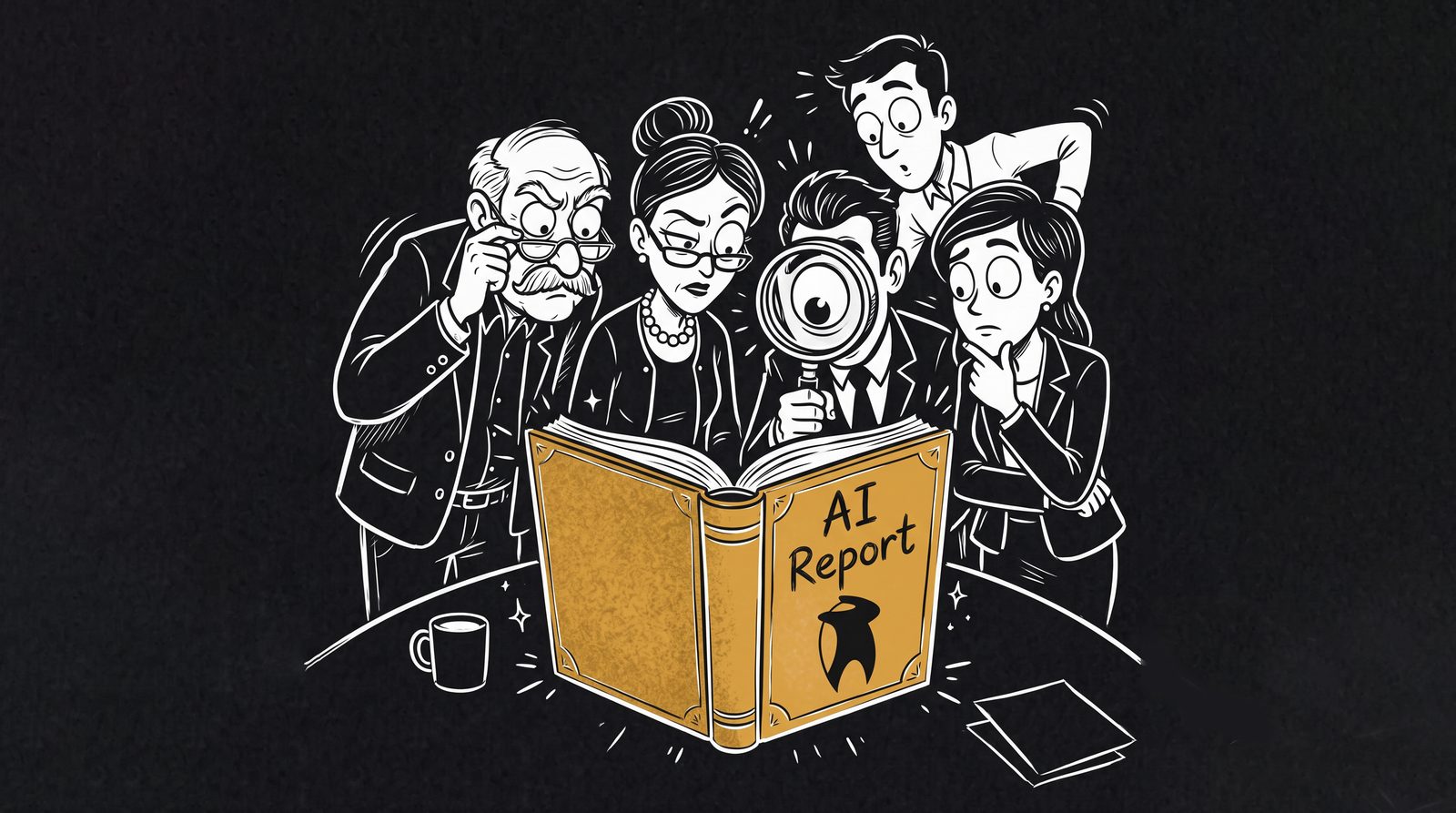
Clients used to skim our quarterly SEO reports. Now they ask for the AI section first
Every quarterly SEO report now has a dedicated AI section showing how a client tracks against AI-driven search. Why clients read it first.

It would be easy to spend half the working week chasing AI news. Something new lands practically every hour, and it is genuinely tempting to stop and look at all of it. Instead, we've built some actual structure around how the business pays attention to this never-ending tsunami of information. We spend our time evolving AI in all the right places so our clients see direct benefits, not an agency that's just talking the talk.
The first piece is a standing AI working group, with one person representing each part of the business: web development, design, content, SEO, paid media, account management. They meet regularly and bring real learnings back to the group: what worked, what didn't, what surprised them, from their own corner of the agency. The value is in the cross-pollination. A shortcut someone in SEO found for structuring a report can get picked up and adapted by account management within days, instead of staying bottled up in one department until someone happens to mention it in passing months later. The business gets smarter as a whole, not just in pockets, and that only happens because someone is deliberately making the introductions between teams that would not otherwise compare notes.
The second piece is smaller, but it might be the one that saves the most time. Rather than leaving everyone to independently scroll AI news, we run a scheduled process at the start of each week that draws only from established, credible sources (Search Engine Journal, among others we trust) rather than whatever is trending, and distils that into a single internal briefing. The point isn't to catch every release. It's to catch the ones actually worth acting on, and let the rest pass by without costing anyone their morning.
The same joined-up thinking now runs through our approach to a website build. It used to be easy for a build to happen inside web development while content, SEO and paid media were brought in once it launched. Increasingly, a build now pulls in what every part of the business already knows about that client, so the site reflects the full picture rather than whatever team happened to be holding the pen that week.
The last piece is less visible but arguably the most important: how everyone in the business, not just new starters, works from the same structure when it comes to AI.
We regularly review AI tool updates, processes, and procedures on a rolling basis so everything stays fresh. Anyone new to the team is exposed to it from day one. Nobody works anything out on their own, nor does anyone's account carry more risk than someone else's based on when they joined.
Security is part of that structure, not the whole of it. It sits alongside a shared knowledge library and standards for how work gets done, so the same job doesn't produce five different results depending on who's touching it.
None of these four things is a flashy AI feature on its own. Put together, they're the reason the rest of what we do with these tools actually holds up.
Every quarterly SEO report now has a dedicated AI section showing how a client tracks against AI-driven search. Why clients read it first.

Why we tell our AI tools not to sugar-coat how an account is tracking, and how more visual reporting helps clients ask sharper questions.

How an AI-built diagnostic tool caught two hidden checkout bugs on a busy online store in hours, and why an engineer still makes the fix.
Book a free call and we will show you where AI-native marketing can grow your business.
Book a call ↗